

Table of Contents
ToggleWhat are the strategies adopted by businesses to reduce missed calls?
This is the third and final article looking at the issue of missed business calls. The first article looked at establishing how many calls are missed by UK businesses; the answer was between 25% to 40%. The second article looked at why calls are missed and then moved on to consider the potential commercial impact of a missed call.
Although the missed call statistics may indicate otherwise, ask any business owner, director or manager whether answering calls is important and they will invariably say yes. In fact, businesses adopt a range of strategies to try and minimise missed calls. This article looks at the pros and cons of these strategies, and makes the case for call answering services as the most effective strategy for eliminating missed calls.
Ten strategies to reduce missed calls
Customer-focussed strategies
- Employ a dedicated receptionist (or strengthen the reception team as and when call volumes warrant it)
- Hunt groups: processes and procedures underpinned by training
- Use a call answering service provider like Paperclip to ensure no calls are missed
Technology-focussed strategies
- Invest in a VOIP phone system to take advantage of features such as call forwarding, call routing and call holding.
- Use an IVR (Interactive Voice Response) system to automatically triage calls so they are directed to the relevant destination
- Use a music on hold (MOH) system to encourage callers on hold to wait longer for their call to be put through
- Use call queueing (and, possibly, automated data collection) to ensure callers are ‘served’ in the order they call (and basic data is captured prior to the call being answered)
- Offer a call back option for when lines are busy
- Use AI chatbots to triage calls and deal with FAQs
- Use voicemail to capture calls that would otherwise be missed
It should be noted that businesses may use a combination of two or more of these strategies when seeking to minimise missed calls.
Customer-focussed strategies
The following strategies are defined as ‘customer-focussed’ because they put the needs of the customer first i.e. answer all calls quickly and professionally.
For the purposes of this article, call answering strategies that prioritise business’ needs over those of its customers are collectively referred to as ‘Technology-focussed’.
Employ a dedicated receptionist

In Paperclip’s opinion the benefits a dedicated reception team brings to an organisation are undervalued. Having someone friendly, empathetic, and knowledgeable answering the phone when you call is a great start to any customer journey. A skilled, trained and professional reception team is, in our opinion, the pinnacle of call answering best practice.
It may seem counter-intuitive, but around 50% of Paperclip’s clients have a dedicated reception team. Paperclip’s role is to step in as an additional call answering resource after a caller has been on hold for, on average, ten seconds. This is known as a delayed divert.
Dedicated reception teams may still struggle to answer all calls for a number of reasons:
- The business they work in has a call profile where call numbers peak at a certain time of the day or week.
- The reception resource may be depleted at certain times due to illness, holidays, bathroom breaks, meals and so on.
- The reception team is itself used as an overflow resource for administrative or other tasks.
- The business has grown and more calls are being received, but they are not yet substantial enough to warrant recruiting a further member of staff.
At such times, it makes sense to have Paperclip available to take calls. No action is required on the part of the reception team. Calls automatically transfer when the delayed divert activates.
Paperclip articles relating to reception desks:
What is the true cost of a receptionist? https://www.paperclip.co.uk/cost-of-a-receptionist/
‘We’ve already got a receptionist, we don’t need call answering’ https://www.paperclip.co.uk/already-got-receptionist-dont-need-call-answering/
Hunt groups: processes and procedures underpinned by training
Many organisations use hunt groups to ensure missed calls are minimised. This can be a very effective approach to take if it is underpinned by processes and procedures reinforced through training.
In our experience, only organisations with proactive, open, ‘sharing’ cultures are able to operate successful hunt group strategies. Here’s why:
- Without this ‘sharing’ culture, people soon realise that some team members answer fewer calls than others. This can lead to a negative atmosphere that undermines customer service.
- Answering the phone is disruptive to the completion of an employee’s core tasks; the ones they are judged and rewarded on. This can be extremely frustrating and start to undermine the benefits of the hunt group approach.
A few of Paperclip’s customers use Paperclip as an end-stop when hunt group options have been exhausted. This typically means the ‘delayed divert’ (see above) is activated after a longer period of time, say, for example, 20 seconds.
20 seconds doesn’t sound like a long time to hold, but it is. In some basic research undertaken by Paperclip, the average time someone was willing to wait for a response to their call was 17 seconds. As this is an average, there are plenty of people who hang up long before 17 seconds.
Hunt groups have their place, but it is difficult to maintain this approach over an extended period of time.
Use a call answering service provider like Paperclip to ensure no calls are missed
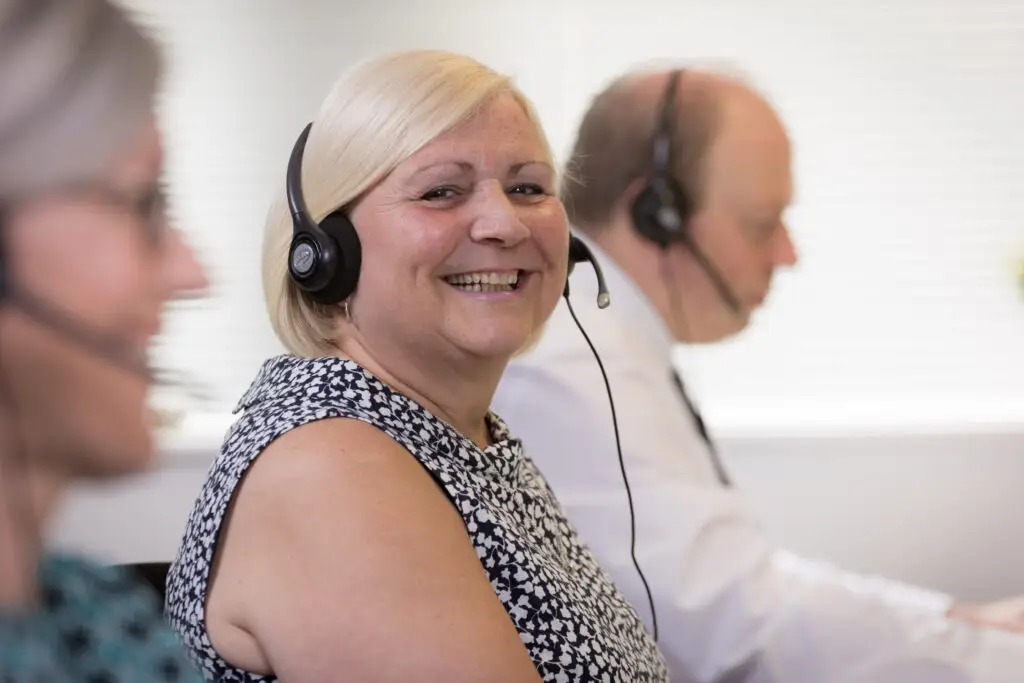
We agree!! The Paperclip mantra is to provide call answering services that are professional, tailored and affordable. When we answer a client’s call, we are, at that moment, an integral member of our client’s team.
Here are just a few of the many advantages of using Paperclip to answer incoming calls:
- Calls are answered, on average, within five seconds. This provides a very positive start to a customer’s journey. It also provides a competitive differentiator compared to other businesses operating in the same sector, particularly if that sector has a generally poor reputation for answering calls e.g. legal, property, medical.
- Calls are answered professionally with the focus on meeting the needs of the caller and the objectives of the client. The Paperclip team does not use scripts, but is guided by the protocols agreed with client. These could include, for example, capturing contact data and updating the client’s CRM; where applicable, booking appointments or meetings into the client’s diary: taking payments and so on.
- Calls are triaged, with only relevant calls being transferred to the client’s team. This minimises disruption to Paperclip’s clients, and allows them to focus on the delivery of their core services.
- Paperclip works with clients to build up FAQ databases. As a result, the Paperclip team is typically able to respond positively to over 75% of callers’ questions. This increases further if the Paperclip team has direct access to a client’s cloud-based management software enabling us to answer questions relating to, for example, appointment slots, stock availability, quotations and more.
- The Paperclip team is able to further enhance the services it provides to clients by making outbound calls on a client’s behalf. Such calls could include, for example, ringing round patients and rescheduling appointments if a therapist is ill, customer service surveys, chasing up aged debts and more.
- Using Paperclip’s services is straightforward; there is no need to change your business number(s), and your callers will be totally unaware they are speaking to Paperclip.
If your business has never used call answering services in the past, then it is understandable that you may have questions and concerns. We are happy to answer any questions you may have – simply call us on 01246 418 181 – and we offer a free two-week trial so you can judge the quality and effectiveness of the services we deliver.
Technology-focussed strategies to reduce missed calls

There is no doubt that many of the technologies used to reduce missing calls – music on hold, interactive voice response, chatbots – are exceptionally clever; and set to become even more sophisticated with the advent of low cost AI and machine learning.
However, just because a technology is ‘clever’ doesn’t necessarily make it right. Invariably, technology-focussed missed call strategies put the needs of the business implementing them first (e.g. cost saving) over those of their customers.
The best way to appreciate this differentiation, is to put yourself in the shoes of a caller to your business:
- How often do you leave messages on voicemail systems? If you do, how effective are businesses in responding to your message.
- Do you enjoy negotiating an IVR triage system – press one for sales, press two for accounts, and so on? How frustrated do you feel when having made your selection, your call is still not answered?
- Do you feel ‘cheated’ when, after three of four exchanges you realise you are speaking to a bot rather than a human being?
- Are you happy to wait online listening to music, even if the system reassures you that your call is important?
As a general rule, people don’t trust voicemail systems, dislike IVR triage systems, feel undervalued if their call is dealt with by a bot, and hate (not too strong a word) listening to music whilst their time is eaten up in order to accommodate the inefficiencies of the business they are calling.
Summary
If you value your customers and the calls they make to your business, then it is important to answer those calls quickly, professionally and effectively. Despite technology advances, customers prefer to interact with a human who can empathise with both the commercial and emotional content of a conversation.
If you believe the above to be true, then employing a trained reception team is ideal, with Paperclip handling overflow calls when the team is busy.
However, if you are struggling with recruiting and retaining quality reception staff (good receptionists are in high demand), then using Paperclip as your reception team is a strong option.
If you are new to call answering, why not take advantage of the Paperclip’s free two-week trial. To find out more go to https://www.paperclip.co.uk/free-trial-plus/, or simply speak to the Paperclip team on 01246 418 181.
Say goodbye to missed calls.

Hi, I’m Louise Bellwood, Director at Paperclip. I am responsible for delivering Paperclip’s customer service and growth strategies for 2024 and beyond, I am a crusader for the benefits call answering can deliver for organisations of all kinds; customer service, sales generation, customer retention and more. If you have a question about call answering – pricing, set-up, benefits – I would love to hear from you at louise@paperclip.co.uk or 01246 418 181.